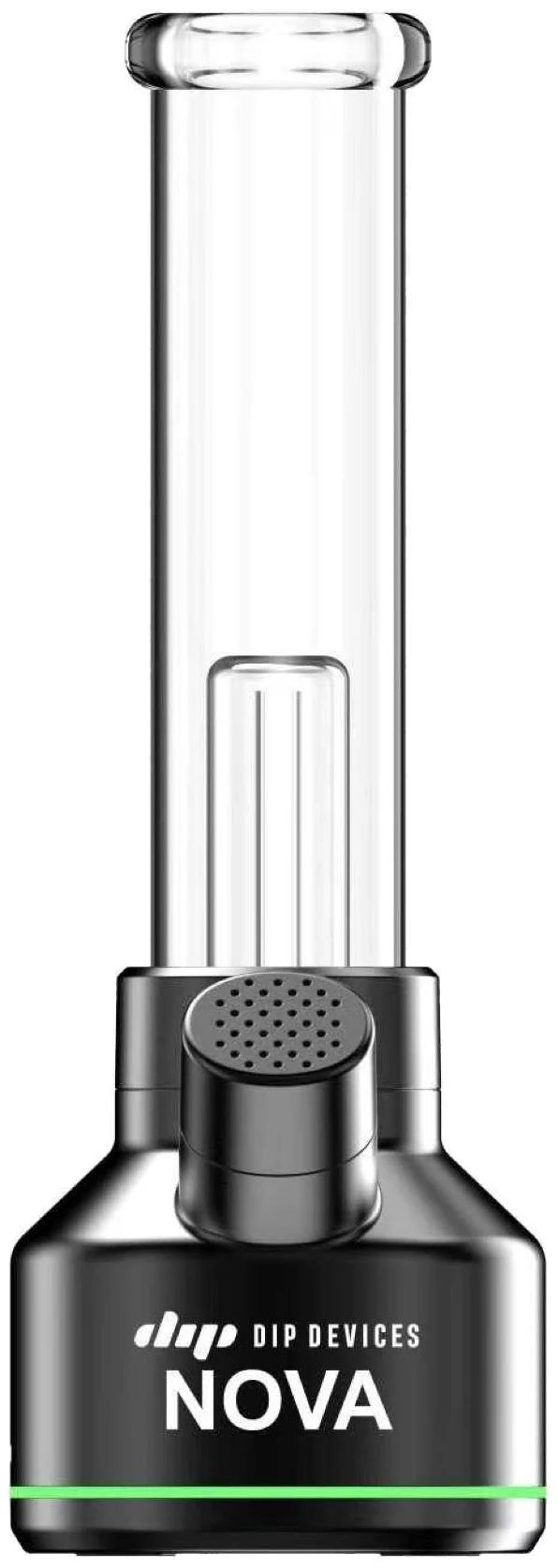
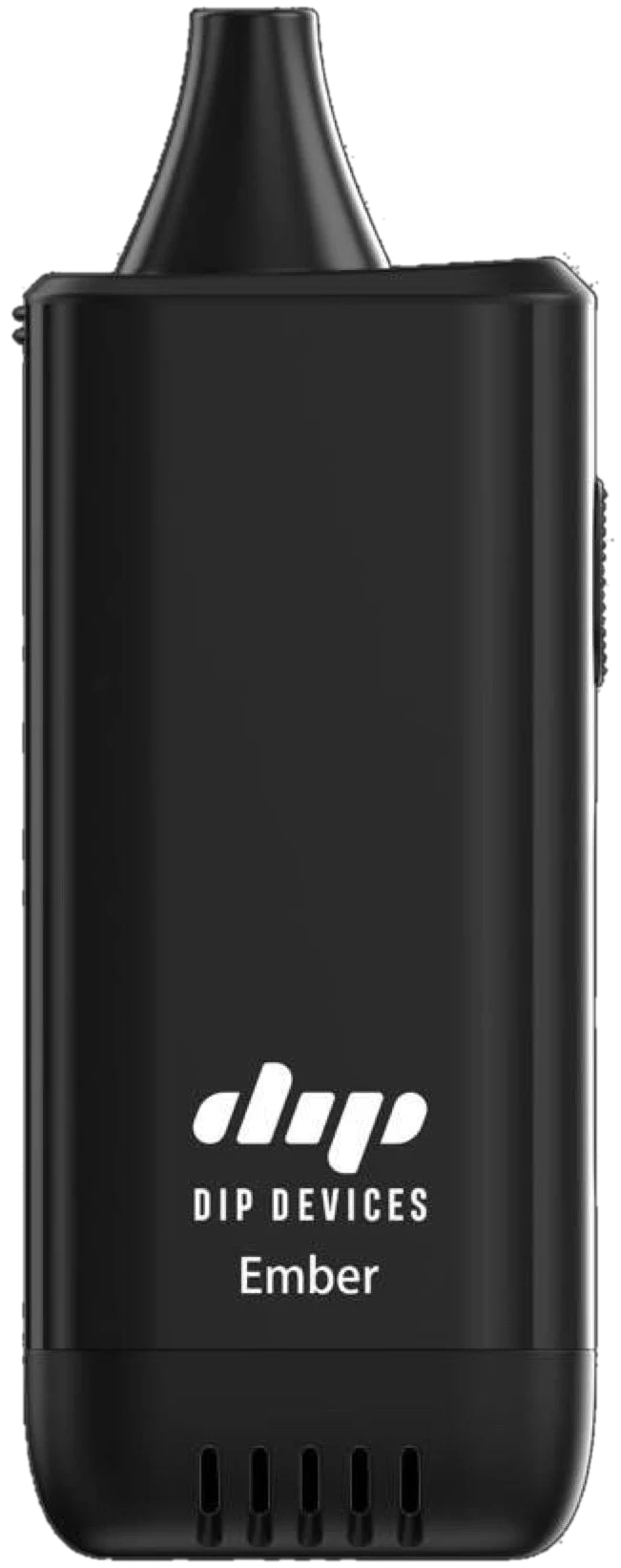
You can put your own brand on the electronic bong and the pocket electronic smoker. Green Lion Innovations manufactures both devices and white-labels them — your logo, your colorway, your packaging — from $28 per unit for the bong and $9 per unit for the pocket smoker, with a minimum order of 2,000 pieces per model. Those are wholesale unit costs to you as the brand, not shelf prices. This page is the exception to how the rest of this site works, so it's worth being direct about that up front.
A disclosure, because this site is normally brand-neutral. Electronic Bong exists to explain the category and point readers to whichever brand fits them — the editorial here doesn't play favourites, and it stays that way. This page is different: it's Green Lion Innovations, the company behind this site, describing its own manufacturing program in its own voice. If you're a consumer looking for a device to buy, this isn't the page you want — where to find an electronic bong is. If you're a brand or a retailer who wants to sell one of these with your name on it, read on.
The program at a glance
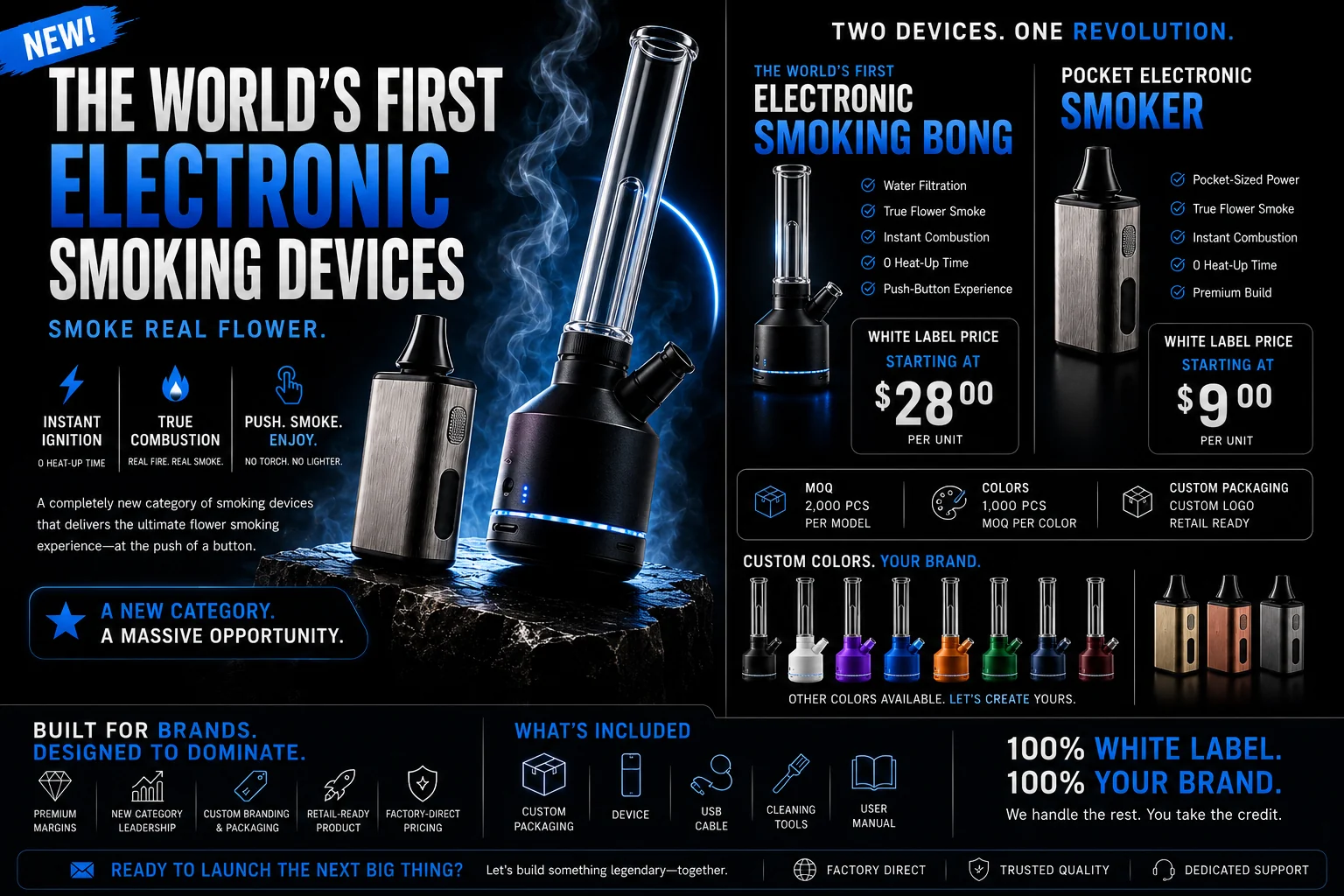
Two devices
The program covers two products, and they solve different shelf problems.
| Electronic smoking bong | Pocket electronic smoker | |
|---|---|---|
| Your unit cost (wholesale, not retail) | From $28.00 per unit | From $9.00 per unit |
| Form factor | Tabletop water pipe | Handheld, pocket-sized |
| Dimensions | 301.77 mm tall · 104.99 mm base | 111.13 × 40.72 × 26 mm |
| Weight | ≈ 900 g · ≈ 1,100 g packaged | ≈ 105 g · ≈ 135 g packaged |
| Battery | 2,000 mAh @ 3.6 V (≈ 7.2 Wh) | 600 mAh @ 3.6 V (≈ 2.2 Wh) |
| Water filtration | Yes — glass tube | No |
| Materials | Plastic base, glass tube | Anodized aluminium body |
| Branding | Silk screen printing (recommended) + custom retail packaging | |
| Ignition | Push-button electric element — instant combustion, 0 heat-up time, no torch or lighter | |
| Output | True flower smoke — this combusts dry herb, it does not vaporize it | |
| MOQ | 2,000 pcs per model · 1,000 pcs per colorway | |
The size difference is the whole point of running both. The bong is a 301 mm tabletop piece with a glass tube and a 2,000 mAh cell — a centrepiece product at a centrepiece price. The pocket smoker is 111 mm and about 105 g, which is impulse-buy territory at $9 a unit. Most brands that take both put the bong on the shelf and the handheld at the counter.
Both run the same idea: an igniter coil replaces the flame, so there's nothing for wind or water to put out and nothing to warm up first. If the mechanism is new to you, how electric combustion works explains it, and what is an electronic bong covers the category.
Pricing and minimums, stated plainly
Most hardware manufacturers make you fill in a form before they'll tell you a number. Here are ours. To be unambiguous: these are what a unit costs you at MOQ — they are not retail prices. What the device sells for is yours to set; we don't publish an MSRP and we don't police yours.
- Electronic smoking bong — from $28.00 per unit to you, at MOQ.
- Pocket electronic smoker — from $9.00 per unit to you, at MOQ.
- MOQ: 2,000 pieces per model. That's per device, not per order — you can run one model or both.
- Colorways: 1,000 pieces minimum per color. Both devices come in a range of colors, plus a standard anodized metal finish. If the color you want isn't in the range, we'll create it at the same minimum.
- Your logo, silk screened. That's what we recommend on both devices — it's durable on an anodized finish and it's what the pricing above assumes.
- Custom packaging with your logo, retail-ready.
These are honest starting figures, not a quote. What you actually pay moves with volume, colorway count and packaging scope — tell us the order and we'll price it properly. Factory-direct: you're buying from the company that makes the device, not through a middleman.
What's in the box
Each unit ships retail-ready: custom packaging, the device, a USB-C cable, cleaning tools and a user manual. You're getting a finished product to put on a shelf, not a component to assemble.
Why brands are taking this one
Eburn describes these as the world's first electronic smoking devices — that's their claim on the sheet above, and the category is new enough that it's a defensible one. What matters commercially is simpler: this is a product category with no incumbent. There's no established brand to out-spend, the vocabulary is still being written, and a genuinely novel device gives you something to say that isn't "our glass is nicer."
- A real product story. Push a button, get flower smoke, no torch and no lighter, works in wind and rain. Customers understand it in one sentence.
- Premium margins. New category, no price anchor to fight, factory-direct cost.
- You take the credit. The device is ours to build; the brand is yours to own. We don't ask to be named on your packaging.
- It already exists. Both devices are in production — you're branding a finished product, not funding R&D.
White-label FAQ
How much does a white-label electronic bong cost?
From $28.00 per unit for the tabletop electronic smoking bong and $9.00 per unit for the pocket electronic smoker, factory-direct from Green Lion Innovations. That's your wholesale cost at MOQ, not a retail price — what you sell it for is entirely your call, and we don't publish an MSRP. Both are "from" figures; the final number depends on volume, colorway count and packaging scope.
What's the minimum order?
2,000 pieces per model, and 1,000 pieces per colorway if you want a custom color. You can order a single model or both.
How does our logo go on the device?
Silk screen printing is what we recommend on both devices, and it's what the pricing above assumes — it holds up well on an anodized finish and it's the most cost-effective method at these volumes. If you have a different method in mind, tell us and we'll quote it.
What can be customized?
Your logo on the device, your choice of colorway — both devices come in a range of colors plus a standard anodized metal finish, and new colors can be created at the 1,000-piece minimum — and custom retail-ready packaging. Changing the device itself — a different design or feature set — is a custom build rather than white-label.
Do we have to mention Green Lion Innovations?
No. White-label means the product carries your brand. Required regulatory and safety markings still apply, but the consumer-facing brand is entirely yours.
Is this vaping hardware?
No, and it matters for how you position it. These devices combust dry herb and produce true smoke — an igniter coil replaces the flame, but the process is combustion, not vaporization. Selling it as a vape would misdescribe it. See vaping vs combustion.
Start a white-label inquiry → Tell us the model, rough volume and your target launch, and we'll come back with real numbers. For brands and retailers; the devices are intended for adults 21+ and sold subject to local law.