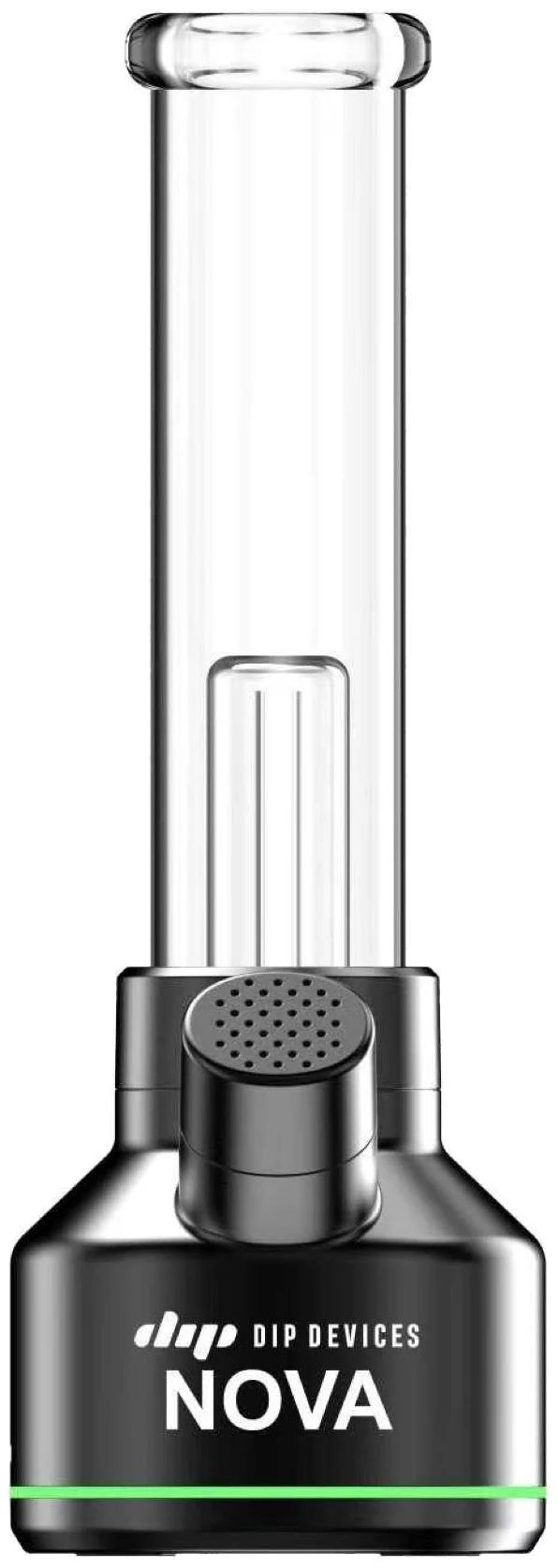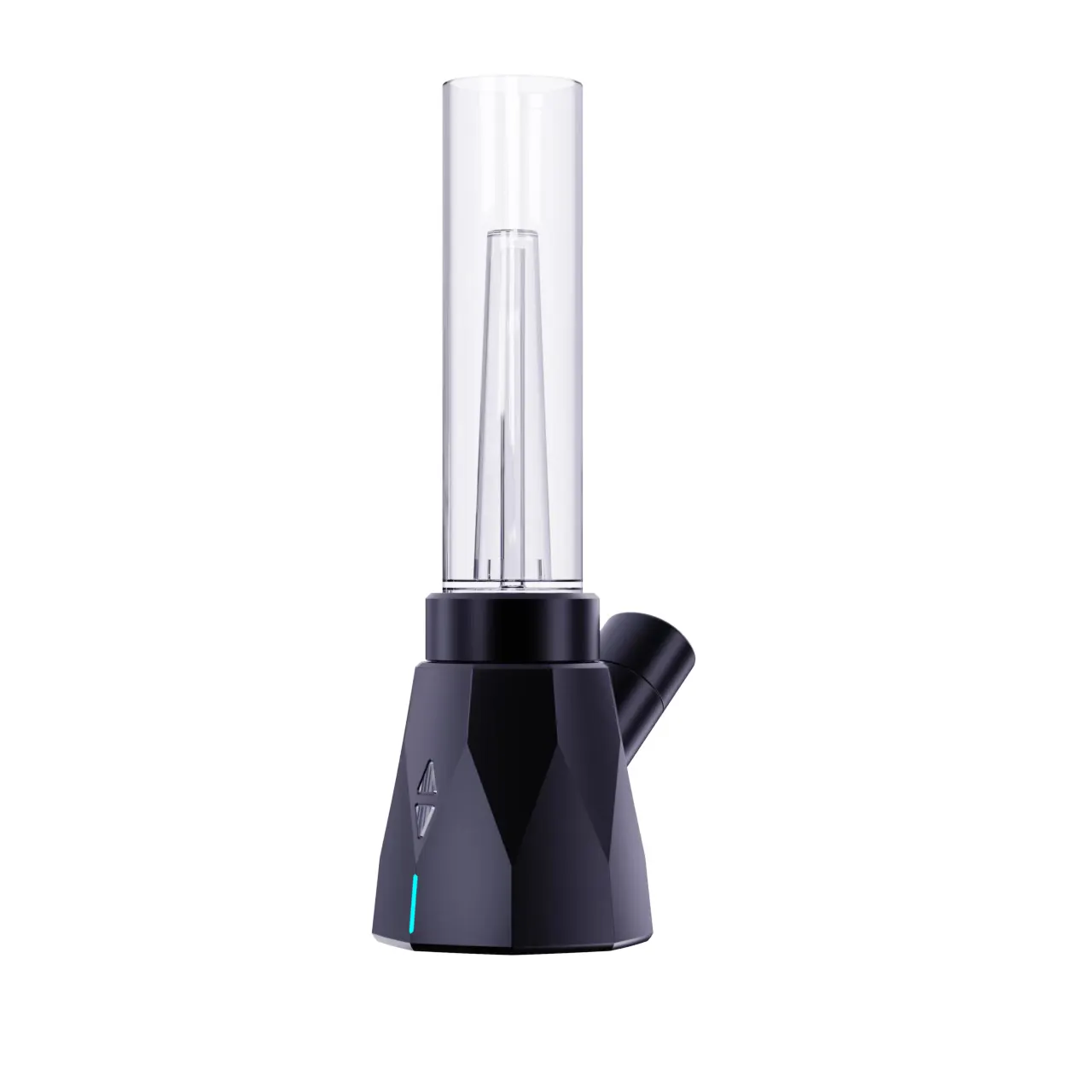
An electronic bong and a traditional bong do the same thing — burn dry herb with true combustion and filter the smoke through water — but the electronic bong (eBong) replaces the lighter with an igniter coil, so it can't be beaten by wind or water and lights evenly every time. Everything else about the experience is intentionally the same: real smoke, a water-cooled draw, the familiar shape. The single change is the ignition, and that one change is what fixes the traditional bong's biggest weakness. Here's the full side-by-side.
The comparison at a glance
| Electronic bong (eBong) | Traditional bong | |
|---|---|---|
| Ignition | Igniter coil (press a button) | Open flame (lighter or torch) |
| Works in wind, water & cold | Yes — no flame to blow out or extinguish | No — the flame fails first |
| Filtration | Water chamber | Water chamber |
| What you inhale | True smoke (combustion) | True smoke (combustion) |
| Consistency of light | Even, repeatable element heat | Depends on lighter angle, flame size and technique |
| Power | Rechargeable battery | None needed |
| Maintenance | Clean glass + element care; recharge | Clean glass + the bowl; carry a lighter |
Ignition: the one thing that actually changes
With a traditional bong you hold a flame to the bowl while you draw. With an electronic bong (eBong) you press a button and an igniter coil glows, bringing the herb past the combustion point directly. Both are true combustion — both produce smoke, not vapor — so the eBong is not a vaporizer and not vaping. The difference is purely how the heat arrives: fire from outside the bowl, versus a glowing element inside it. For the science of how an element can combust without a flame, see how electric combustion works.
Wind and water: where the traditional bong loses
Every flame-based method shares the same point of failure — the flame itself. A lighter gutters in a breeze, won't catch in the cold, and is dead the instant it gets wet. That's why a traditional bong is a frustrating companion on a boat, on a windy patio, at a campsite or on the chairlift. Because the eBong has no open flame, there's nothing for wind to blow out and nothing for water to extinguish: it's windproof, waterproof and flameless by design, and it can't be beaten by wind or water. That's not a slogan — it's the literal mechanism, and it's the backbone of every windproof, waterproof smoking use case. (Treat any specific water-resistance rating as device-specific.)
Filtration and what you inhale: identical on purpose
Here's the part that surprises people: the smoke is the same. Both devices pull combustion smoke down through a water chamber and up the tube, so you get the same cooling and the same water filtration. The eBong wasn't built to change the hit — it was built to change the ignition while keeping the classic water-pipe draw intact. If you've used a traditional bong, an eBong will feel instantly familiar.
Consistency: even heat vs. lighter technique
A traditional bong's light is only as good as your lighter technique — flame angle, how long you hold it, whether it's windy, whether the butane is running low. An eBong's element delivers the same heat the same way every time you press the button, so the burn is even and repeatable. For some people that consistency is the real upgrade, separate from the wind-and-water story.
Power and maintenance: the trade-offs
Nothing is free. A traditional bong needs no power and never has to be charged — but it does need a lighter you have to keep buying, refilling or finding. An eBong has a rechargeable battery to keep topped up, plus an element to look after, but it never leaves you hunting for a flame. On cleaning, both want the same glass-and-bowl care; the eBong adds basic element upkeep. Pick your trade-off: a device that needs power but no flame, or a device that needs a flame but no power.
So which is better?
If you mostly smoke at home in still air and like the simplicity of glass plus a lighter, a traditional bong does the job it always has. If you want the same true smoke and water draw but you're tired of the flame failing — on the water, in wind, in the cold — or you just want an even, repeatable light, the eBong is the upgrade. They produce the same smoke; you're really choosing between a flame and a button. And if your hesitation is that an electric device sounds like a vape, it isn't — read is it vaping? for why an eBong is combustion, not vaporization. More quick answers live on the FAQ hub.
Electronic bong vs traditional bong FAQ
Is an electronic bong better than a traditional bong?
It depends on how you smoke. The eBong produces the same true smoke and water-filtered draw, but works in wind and water and lights evenly — its advantage is the ignition, not the hit. A traditional bong needs no battery.
Does an electronic bong taste different from a regular bong?
The output is the same — true combustion smoke, cooled through water — so the experience is built to feel familiar rather than different.
Is an electronic bong a vape?
No. It uses electric combustion to burn dry herb and make smoke, not vapor, so it's combustion — not vaping. See is it vaping?
Do you still need a lighter with an electronic bong?
No. The igniter coil replaces the flame entirely — there's no lighter or torch involved, which is what lets it work in wind and water.
Ready to trade the lighter for a button? Browse the electronic bong range and find where to get one. 21+ only; follow your local laws.